
A freezer that runs but does not keep food properly frozen can quickly become more than a minor inconvenience. Rising temperatures may lead to spoiled food, higher electricity consumption, and additional strain on the appliance’s cooling system.
If your freezer is not getting cold enough, the cause could be something relatively simple, such as blocked airflow or an improperly closed door. In other cases, the problem may involve a failed fan, temperature sensor, defrost system, compressor component, or electronic control.
This guide explains the most common reasons a freezer stops freezing, what Maryland homeowners can safely check themselves, and when it is time to schedule professional freezer repair service.
A properly operating household freezer should generally maintain a temperature around 0°F (-18°C). At this temperature, food remains frozen and can be safely stored for extended periods.
If ice cream becomes soft, frozen food begins to thaw, or ice cubes take significantly longer to freeze, the actual temperature may be higher than the selected setting.
A freezer thermometer can help confirm whether the appliance is reaching the correct temperature. Keep in mind that temperatures may temporarily rise after the door has been opened frequently or after a large amount of unfrozen food has been added.
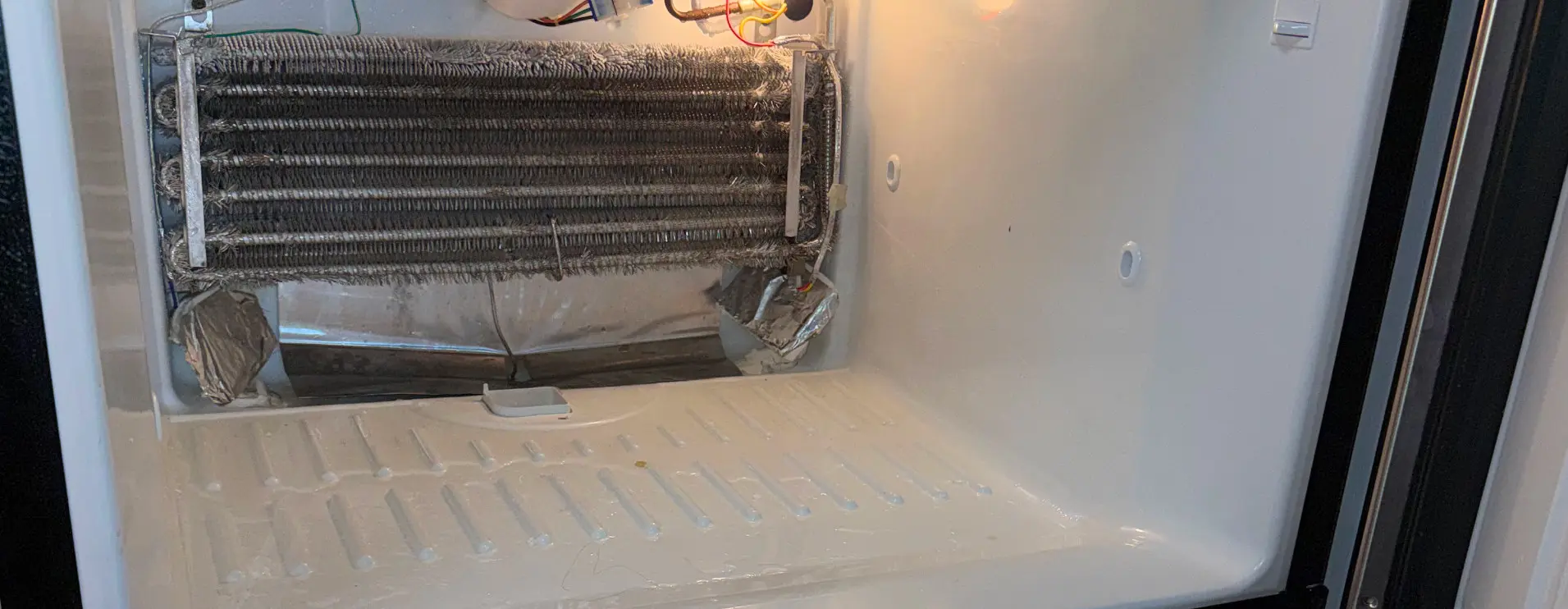
When a freezer appears to be running but remains too warm, several different systems could be responsible. Some of the most common causes include:
Because many of these problems produce similar symptoms, accurate diagnosis is important before replacement parts are ordered.
Before assuming that a component has failed, check the temperature control. The setting can sometimes be changed accidentally while food is being moved or the interior is being cleaned.
Digital freezers may also have special modes such as Vacation, Eco, Sabbath, or Demo Mode depending on the model. These settings can affect normal cooling operation.
If the temperature control appears correct, allow the appliance enough time to stabilize before checking the internal temperature again.
Warm household air entering the freezer is one of the simplest causes of poor freezing performance.
Check whether:
A damaged gasket allows cold air to escape while warm, humid air enters the compartment. This can cause the compressor to run longer and may also create excessive frost.
Cold air must circulate throughout the freezer compartment. Packing food tightly against internal vents can restrict airflow and create uneven temperatures.
Some areas may remain frozen while food in other sections begins to soften.
Try rearranging food so there is adequate space around the vents and between packages. Avoid filling the appliance so tightly that cold air cannot circulate.
A thick layer of frost on the interior back panel can be an important warning sign.
Many modern freezers automatically remove frost from the evaporator coils using a defrost system. When a defrost heater, temperature sensor, timer, or electronic control fails, frost can accumulate around the evaporator.
Eventually, the ice restricts airflow and prevents cold air from circulating through the freezer.
Manually defrosting the appliance may temporarily restore cooling, but if the frost returns, the underlying defrost-system problem still needs to be diagnosed.
The evaporator fan circulates cold air from the evaporator coils throughout the freezer compartment.
If the fan fails, the cooling system may continue operating while the interior temperature gradually rises.
A damaged fan may also produce:
Sometimes the fan itself is functional but cannot rotate because frost has formed around the blades.
Testing or replacing an internal freezer fan generally requires appliance disassembly and should be handled by an experienced technician.
Depending on the appliance design, condenser coils may be located underneath or behind the freezer. Their purpose is to release heat collected from inside the appliance.
When accessible condenser coils become heavily covered with dust, pet hair, or debris, the refrigeration system may have difficulty releasing heat efficiently.
This can cause:
If your manufacturer recommends condenser cleaning, follow the instructions in the appliance manual and disconnect electrical power before performing maintenance.
A freezer may run longer than normal during hot weather or after a large grocery load has been added. However, continuous operation combined with poor freezing usually indicates that the appliance is struggling to reach the selected temperature.
Potential causes include:
Continuous operation should not be ignored. The longer the freezer struggles to maintain temperature, the more stress may be placed on the compressor.
Repeated clicking can sometimes indicate that the compressor is attempting to start but cannot remain running.
Possible causes include a faulty compressor start relay, electrical connection problem, control issue, or compressor failure.
If you hear repeated clicking and the freezer temperature continues to increase, professional diagnostic testing is recommended.
A freezer that is not cooling correctly may also develop water around or underneath the appliance.
Possible causes include:
Water leaks should be addressed quickly because they can damage flooring and cabinetry and may create a hazard around electrical equipment.
Yes. The compressor is a critical part of the refrigeration system. It circulates refrigerant and allows heat to be removed from the freezer compartment.
However, a freezer that is not freezing does not automatically mean the compressor has failed. A malfunctioning fan, start relay, thermostat, sensor, defrost component, or control board can sometimes create similar symptoms.
This is why professional diagnostics are especially important before concluding that a major refrigeration component needs replacement.
If your freezer is not maintaining temperature, you can perform several basic checks without disassembling the appliance:
If the breaker repeatedly trips, the freezer produces a burning smell, or you see damaged electrical components, discontinue use and arrange professional service.
You should consider scheduling professional service if:
In many situations, repairing a freezer can be more economical than replacing it, particularly when the appliance is relatively new or the problem involves a replaceable component.
Repair may make sense when the problem involves:
The appliance’s age, condition, repair history, model, and replacement cost should all be considered. After diagnosing the problem, a technician can explain the repair options and help you decide whether repair is financially practical.
InterTech Appliance Repair provides professional freezer diagnostics and repair for homeowners throughout Maryland. Our service area includes Bethesda, Rockville, Potomac, Silver Spring, Gaithersburg, Germantown, North Bethesda, Kensington, Chevy Chase, Derwood, Clarksville, Fulton, Ellicott City, and Columbia.
We also serve customers in Washington, DC and selected Northern Virginia communities, including Arlington, Alexandria, McLean, Tysons, Falls Church, and Reston.
If you are searching for freezer repair near me because your appliance is not cooling, is accumulating frost, or has started making unusual noises, professional diagnostics can help determine the exact cause before more extensive damage develops.
The temperature may be too high for safe frozen-food storage even though the compartment still feels cold. Common causes include restricted airflow, a failing fan, frost-covered evaporator coils, a temperature-sensor problem, or a refrigeration-system fault.
In refrigerator-freezer combinations, the two compartments share parts of the cooling system. A failed evaporator fan, blocked airflow, defrost problem, sensor malfunction, or damper issue can sometimes affect one compartment more than the other.
A power reset may clear some temporary electronic errors, but it will not repair a failed component. If the problem returns after restarting the appliance, diagnostic service is recommended.
Recurring frost commonly indicates warm air entering through the door or a problem with the automatic defrost system. A damaged gasket, defrost heater, sensor, or electronic control may be responsible.
Symptoms such as repeated clicking, poor cooling, unusual compressor noises, or continuous operation may be associated with the compressor, but they can also be caused by less expensive components. Compressor condition should be confirmed through professional testing.
Consider the appliance’s age, condition, energy efficiency, repair cost, and replacement price. A diagnostic inspection can identify the failed component before you decide whether replacement makes more financial sense.
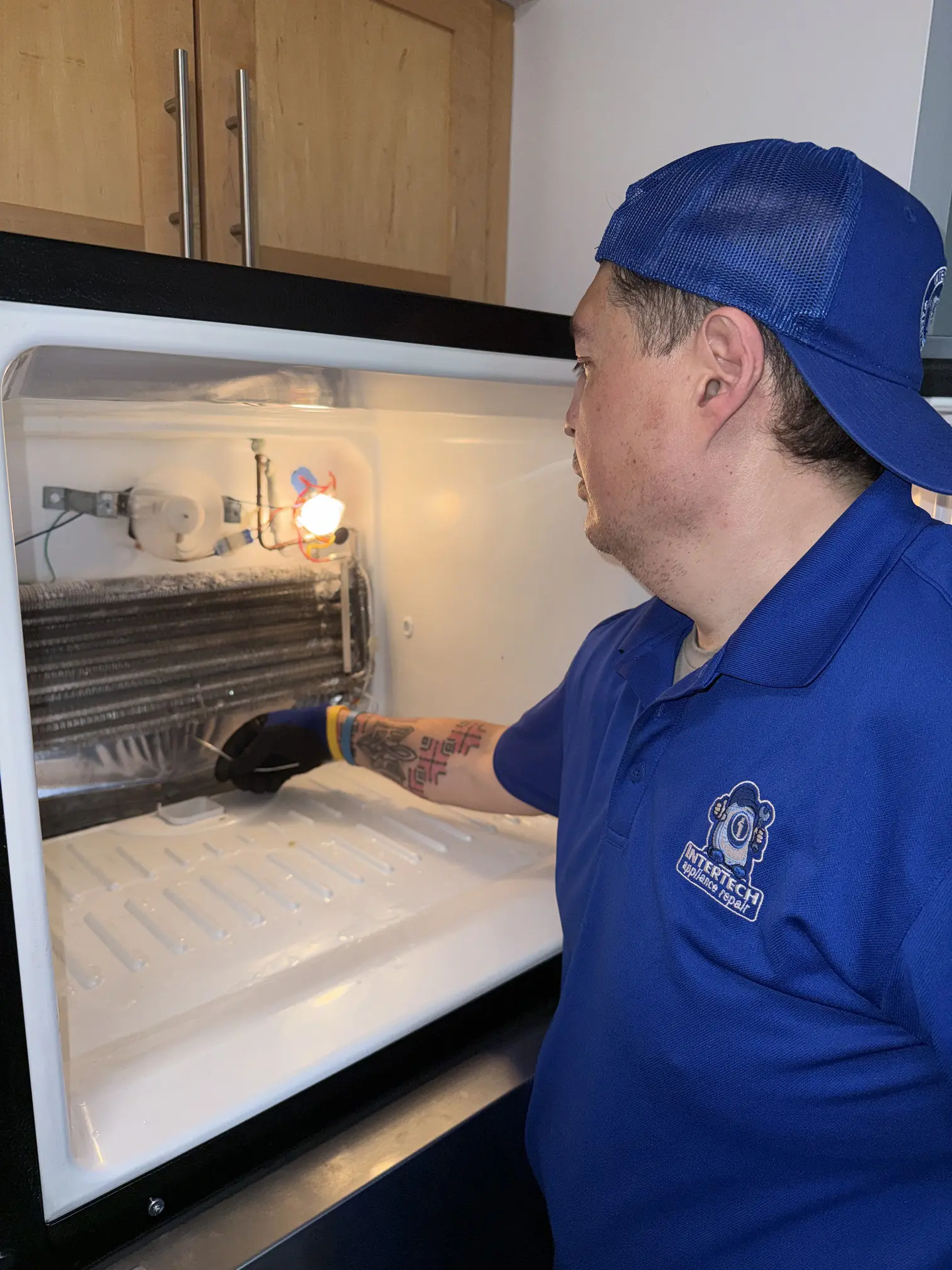
A freezer that is gradually becoming warmer can put hundreds of dollars in stored food at risk. Waiting until the appliance stops cooling completely may also allow a smaller problem to cause additional strain on other components.
If your freezer is not freezing, leaking, running continuously, developing excessive frost, or making unusual noises, schedule professional Freezer Repair Services with InterTech Appliance Repair.
Professional diagnosis can identify the source of the problem and help restore reliable freezer operation for your Maryland home.