
A cooktop that suddenly stops heating can make everyday meal preparation difficult. Sometimes only one burner fails, while in other cases the entire cooking surface may stop working. Electric, gas, and induction cooktops all operate differently, so the cause of the problem depends heavily on the type of appliance you have.
Some issues can be traced to settings, cookware, or a dirty burner. Others may involve heating elements, ignition components, sensors, switches, wiring, or electronic controls.
This guide explains the most common reasons a cooktop stops working, what Maryland homeowners can safely check themselves, and when it is time to schedule professional Cooktop Repair Services.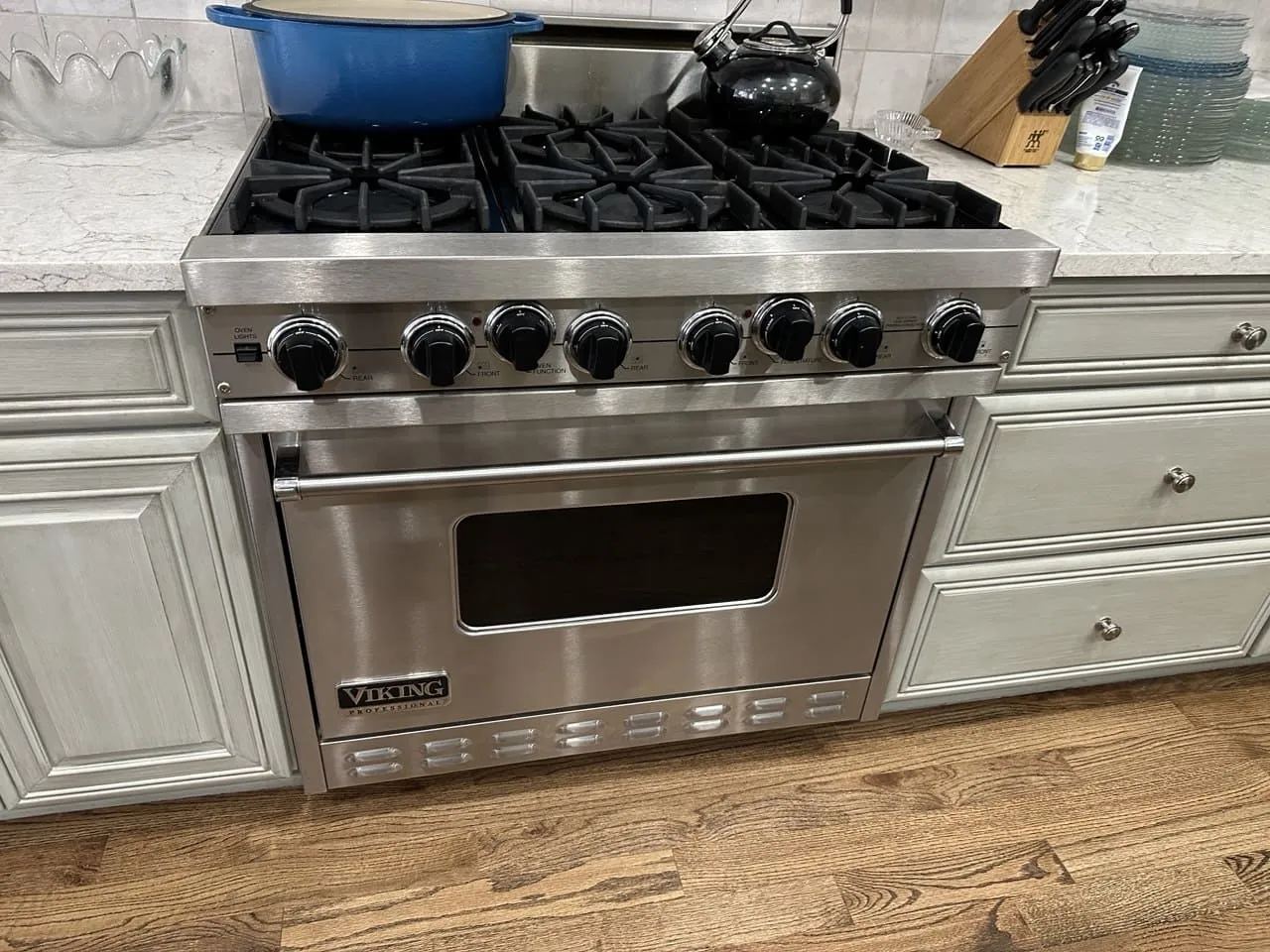
A cooktop may stop heating for several reasons. The most common causes include:
The exact cause depends on whether the appliance is electric, radiant glass, induction, or gas.
Before replacing any components, it is important to determine whether the problem affects one cooking zone or the entire cooktop.
When only one burner stops heating while the other burners continue to work, the problem is usually associated with that specific cooking zone.
Possible causes include:
On traditional electric coil cooktops, homeowners may be able to confirm that the removable burner is seated correctly in its receptacle after the appliance has been turned off and completely cooled.
Glass-top radiant cooktops are different. Their heating elements are located underneath the glass surface and usually require partial disassembly of the appliance for testing.
If a radiant burner no longer heats or heats inconsistently, professional diagnostic service is recommended.
A burner that remains extremely hot even when a lower setting is selected should not be ignored.
This problem may indicate a defective burner control switch or electronic control component. When the control fails, it may continue supplying full power to the heating element regardless of the selected setting.
Common symptoms include:
If the temperature cannot be controlled normally, stop using the affected burner until the appliance is inspected.
Radiant glass cooktops use electrical heating elements installed underneath a ceramic-glass surface.
If a cooking zone stops heating, the problem may involve:
Some radiant elements naturally cycle on and off during normal cooking. This helps regulate temperature and protect the glass surface.
However, if a burner never heats, remains on continuously, or cannot maintain the selected temperature, the appliance may require repair.
Induction cooktops operate differently from conventional electric models. Instead of heating an element underneath the cookware, induction technology creates a magnetic field that heats compatible cookware directly.
If an induction burner is not working, first check the cookware.
The pan should:
One easy test is to place a magnet against the bottom of the pan. If the magnet strongly attaches to the cookware, it is generally compatible with induction cooking.
If compatible cookware works on other burners but not on one specific zone, the issue may involve:
These components require professional diagnostic equipment.
A gas cooktop normally produces a clicking sound for a few seconds while the spark electrode ignites the gas.
If clicking continues but the burner does not light, check whether the burner cap is properly positioned.
Other common causes include:
After the cooktop has completely cooled, removable burner components can be cleaned according to the manufacturer’s instructions.
Avoid using objects that may damage or enlarge the burner openings.
If the burner continues clicking without ignition after cleaning and drying, the ignition system may need professional service.
If you smell gas around a cooktop, do not continue troubleshooting the appliance.
Turn the burner controls off if it is safe to do so and avoid anything that could create a flame or electrical spark.
Do not:
Follow the emergency guidance provided by your local gas utility or emergency authorities.
A recurring gas odor requires immediate attention and should never be treated as a normal cooktop problem.
A properly operating gas burner should produce a stable and relatively even flame around the burner.
An uneven or weak flame may result from:
Cleaning accessible burner components may solve minor problems caused by food debris.
Internal gas valves, regulators, and gas connections should be inspected by a qualified technician.
Electric and induction cooktops usually require a dedicated high-voltage circuit.
If the circuit breaker trips once, the problem may be temporary. However, a breaker that repeatedly trips can indicate a more serious electrical issue.
Possible causes include:
Do not repeatedly reset a breaker that trips every time the cooktop is used. Continued operation may cause additional electrical damage.
Professional testing can determine whether the problem is inside the cooktop or related to the home’s electrical supply.
Modern cooktops often use electronic touch controls rather than traditional mechanical knobs.
If the control panel becomes unresponsive, first check whether the Control Lock or Child Lock feature is enabled.
You may also try resetting the appliance according to the manufacturer’s instructions.
If the controls remain unresponsive, possible causes include:
Recurring error codes can also provide useful information about which system has detected a malfunction.
A cracked glass cooktop should generally not be used.
Even a small crack can become larger as the cooking surface repeatedly heats and cools. Liquids may also enter through the damaged glass and reach electrical components underneath.
Using heavy cookware on a cracked surface can make the damage worse.
In most cases, cracked cooktop glass is replaced rather than repaired.
A technician can identify the cooktop model, check replacement-part availability, and determine whether replacing the glass is economically practical.
Food or grease left on a hot cooking surface may temporarily create a burning smell. The cooktop should be allowed to cool before it is cleaned.
A persistent electrical, plastic, or wiring smell is different.
Possible causes include:
If you notice smoke, visible sparks, melted components, or a strong electrical smell, stop using the cooktop and arrange professional service.
Before scheduling service, Maryland homeowners can perform several simple checks without disassembling the appliance.
Avoid removing the cooktop, opening electrical panels, working with internal wiring, or adjusting internal gas components unless you have appropriate professional training.
Professional diagnosis is recommended when:
Diagnosing the appliance early may help prevent additional damage to surrounding components.
Whether repair or replacement is the better option depends on several factors:
Cooktop repair may be particularly worthwhile when the problem involves a replaceable:
Repair may also be attractive for high-end induction and gas cooktops or appliances installed in custom countertops.
Replacing a built-in cooktop is not always as simple as purchasing a new appliance. Different models may have different cutout dimensions, electrical requirements, or gas connections.
Professional diagnosis allows you to understand the repair cost before deciding whether replacement is necessary.
InterTech Appliance Repair provides professional cooktop diagnostics and repair throughout multiple Maryland communities, including:
Service is also available in Washington, DC and selected Northern Virginia communities, including Arlington, Alexandria, McLean, Tysons, Falls Church, and Reston.
If you are searching for cooktop repair near me because a burner will not heat, your gas cooktop will not ignite, or an induction zone has stopped working, professional diagnostics can identify the source of the problem before unnecessary parts are replaced.
The cooktop may have a failed heating element, burner switch, power connection, control component, or internal wiring problem. If all burners are affected, the main electrical supply should also be checked.
When the remaining burners work normally, the problem is often limited to that cooking zone. A heating element, burner receptacle, switch, igniter, sensor, or associated wiring may have failed.
Continuous clicking may be caused by moisture, food debris, incorrect burner-cap placement, a contaminated spark electrode, defective ignition switch, or failed spark module.
The cookware may not be induction compatible, may be too small for the cooking zone, or may not be centered properly. If compatible cookware works on other zones, the cooktop itself may have an electrical or electronic failure.
Cracked ceramic glass is generally replaced rather than repaired. Continuing to use the appliance may allow the crack to spread or liquids to reach electrical components.
Professional service is recommended when basic checks do not resolve the problem, when the appliance repeatedly trips a breaker, when burners cannot be controlled properly, or when there are gas, electrical, smoke, or burning-odor concerns.
A cooktop that no longer heats properly can make everyday cooking difficult and may create additional electrical or gas-related safety concerns. Problems such as nonheating burners, failed ignition, uncontrolled temperature, recurring error codes, and damaged controls should be diagnosed before they become more serious.
For professional Cooktop Repair Services, contact InterTech Appliance Repair.
Professional diagnostics can help identify whether the problem involves the burner, heating element, ignition system, sensor, wiring, or electronic controls and determine the most practical way to restore reliable cooktop operation.