Common Washing Machine Problems in Maryland Homes
A reliable washing machine is something most homeowners rarely think about until it suddenly stops working. Whether you’re washing clothes after a busy workweek or handling laundry for a large family, a malfunctioning washer can quickly become a major inconvenience. While modern washing machines are built to last for many years, regular use, hard water, heavy loads, and worn components eventually lead to mechanical or electrical problems.
Throughout Maryland, homeowners experience many of the same washer issues regardless of the brand or model they own. Some problems develop gradually, while others appear without warning. Understanding these common warning signs can help you prevent larger repairs, reduce appliance downtime, and extend the life of your washing machine.
At InterTech Appliance Repair, we provide professional Washer Repair services for homeowners across Maryland, Washington, DC, and Northern Virginia. Our experienced technicians repair front-load, top-load, and high-efficiency washing machines from all major manufacturers.
Why Washing Machines Commonly Break Down
Although washing machines are designed to handle thousands of wash cycles, every component experiences wear over time. Continuous vibration, moisture, detergent residue, and heavy loads gradually affect moving parts and electrical systems. Ignoring small problems often allows them to develop into much more expensive repairs.
Several factors contribute to washer failures, including:
- Normal wear and tear
- Hard water mineral buildup
- Overloading the drum
- Using incorrect detergent
- Poor maintenance
- Power fluctuations
- Blocked drain systems
- Damaged water supply hoses
Fortunately, many of these issues can be identified early before they lead to complete appliance failure.
1. Washing Machine Won’t Start
One of the most common service calls involves washing machines that simply refuse to start. While homeowners often assume the appliance has completely failed, the actual problem may be relatively simple.
A washer may fail to start because of:
- A defective door lock assembly
- A faulty lid switch
- Power supply issues
- A damaged control board
- A failed start button
- Electrical wiring problems
Modern washing machines include multiple built-in safety systems that prevent operation whenever the door cannot lock properly. Diagnosing electrical problems requires specialized testing equipment and should generally be left to experienced appliance technicians.
2. Washer Won’t Drain Properly
Standing water inside the drum after a completed wash cycle is another issue Maryland homeowners frequently encounter. Drainage problems not only prevent the washer from completing its cycle but also create unpleasant odors and encourage mold growth inside the appliance.
Common causes include:
- Blocked drain hoses
- Clogged pump filters
- Foreign objects inside the drain pump
- Failed drain pumps
- Damaged pressure switches
- Control board failures
Small objects such as coins, socks, hairpins, and buttons commonly become trapped inside drain pumps, reducing water flow and eventually damaging the pump itself.
If your washer repeatedly leaves water inside the drum, scheduling professional washer repair service can prevent additional damage to the motor and internal components.
3. Washer Is Leaking Water
Water leaks are among the most serious washing machine problems because they can damage flooring, drywall, cabinets, and nearby electrical equipment. Even small leaks should never be ignored.
Leaks commonly originate from:
- Damaged inlet hoses
- Loose water connections
- Cracked drain hoses
- Faulty drain pumps
- Door gasket damage
- Worn tub seals
Front-load washers are especially prone to gasket-related leaks if the rubber door seal becomes torn or develops mold buildup that prevents a proper seal.
Many homeowners continue using a leaking washer because the leak appears minor. Unfortunately, water damage often becomes significantly more expensive than the appliance repair itself.
4. Loud Noises During the Spin Cycle
Some operational noise is perfectly normal, especially during high-speed spin cycles. However, grinding, banging, squealing, knocking, or scraping sounds usually indicate worn mechanical components.
Common causes include:
- Failed drum bearings
- Broken suspension rods
- Damaged shock absorbers
- Loose counterweights
- Worn drive belts
- Foreign objects trapped inside the drum assembly
Ignoring unusual sounds often allows the problem to worsen, eventually affecting additional components and increasing repair costs.
5. Washer Doesn’t Spin Clothes Properly
If clothing remains soaking wet after the wash cycle finishes, your washing machine may not be reaching full spin speed. This issue can have several different causes, ranging from simple load imbalance to major mechanical failures.
Possible reasons include:
- Broken drive belt
- Motor problems
- Faulty lid switch
- Suspension failures
- Control board malfunction
- Overloaded drum
Running repeated wash cycles without correcting the underlying issue places unnecessary stress on the motor and transmission components.
6. Error Codes on the Display
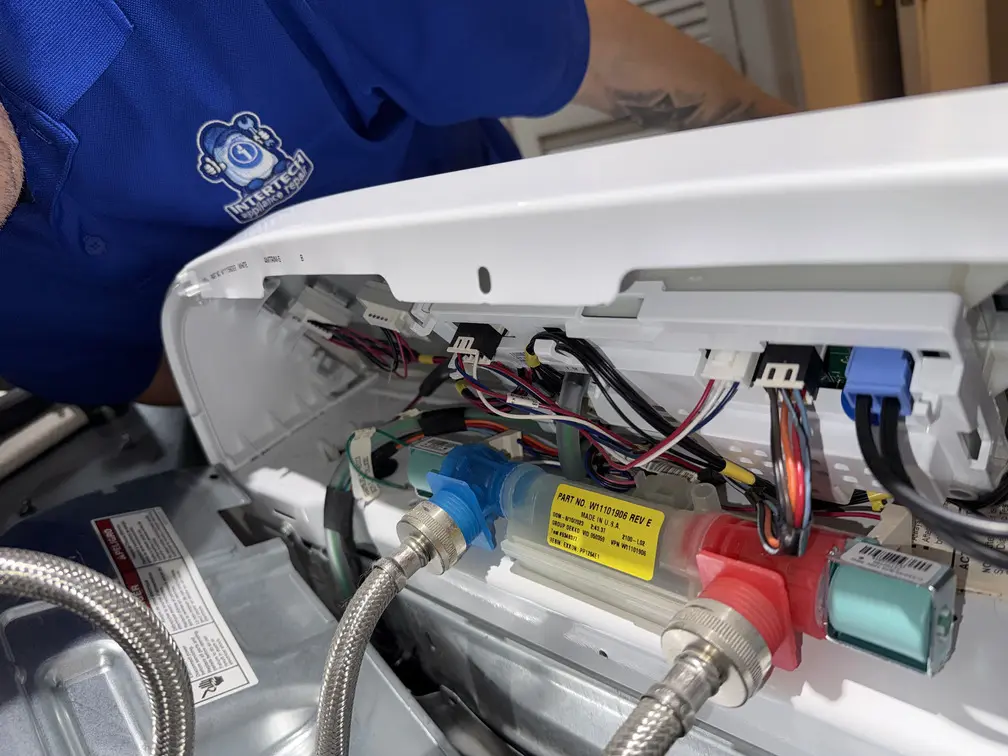
Today’s washing machines are equipped with advanced electronic controls that monitor every stage of the wash cycle. When something goes wrong, the appliance usually displays an error code instead of continuing to operate. While these codes are helpful, they rarely identify the exact failed component.
Common error codes may indicate:
- Water inlet problems
- Drainage restrictions
- Door lock failures
- Motor communication errors
- Temperature sensor malfunctions
- Control board issues
Resetting the washer may temporarily clear the display, but if the same code returns, the underlying problem still exists. Professional diagnostics allow technicians to identify the failed component quickly and avoid unnecessary parts replacement.
7. Unpleasant Odors Coming from the Washer
Bad odors are one of the most common complaints among owners of front-load washing machines. Moisture trapped inside the drum, detergent dispenser, drain system, and rubber door gasket creates an ideal environment for mold and mildew growth.
Odors are often caused by:
- Soap residue buildup
- Standing water inside the drain system
- Dirty drain filters
- Mold around the door gasket
- Using too much detergent
Regular cleaning can significantly reduce odor problems, but persistent smells may indicate hidden drainage issues or clogged internal components that require professional service.
8. Excessive Vibration and Shaking
Washing machines naturally vibrate during high-speed spin cycles, but excessive shaking is not normal. If the appliance moves across the floor, bangs against nearby cabinets, or produces unusually strong vibrations, there is likely an underlying mechanical issue.
Excessive vibration may result from:
- Unbalanced laundry loads
- Worn suspension rods
- Damaged shock absorbers
- Loose counterweights
- Uneven flooring
- Failed drum bearings
Continuing to use a washer that vibrates excessively can place additional stress on the drum, motor, suspension system, and cabinet, leading to more extensive repairs.
How Maryland’s Hard Water Can Affect Your Washer
Many homeowners throughout Maryland experience hard water, which contains elevated levels of calcium and magnesium minerals. Over time, these minerals accumulate inside washing machine hoses, inlet valves, heating elements, and internal plumbing.
Mineral buildup can reduce water flow, increase detergent residue, decrease cleaning performance, and shorten the lifespan of important components. Regular maintenance and occasional cleaning cycles help minimize these effects and keep the appliance operating efficiently.
Simple Maintenance Tips to Prevent Washer Problems
Although some component failures are unavoidable, routine maintenance can significantly reduce the likelihood of unexpected breakdowns.
- Do not overload the drum.
- Use the correct detergent for your washer.
- Clean the drain pump filter regularly.
- Inspect water supply hoses once a year.
- Leave the washer door slightly open after each cycle.
- Run a drum cleaning cycle every month.
- Remove wet laundry promptly after each wash.
- Watch for unusual noises, leaks, or vibration.
These simple maintenance habits can help extend the life of your washing machine while reducing the likelihood of unexpected repair costs.
Professional Washer Repair Throughout Maryland
If your washing machine has stopped working correctly, professional diagnosis is often the fastest and most cost-effective solution. Delaying repairs can allow a minor issue to develop into a major mechanical failure that requires significantly more expensive repairs or even appliance replacement.
InterTech Appliance Repair services all major residential washing machine brands and provides fast, reliable washing machine repair service for front-load, top-load, and high-efficiency models.
Our Maryland Service Areas
We proudly provide washer repair services throughout Maryland, including Bethesda, Rockville, Potomac, Silver Spring, Columbia, Ellicott City, Clarksville, Fulton, Gaithersburg, Germantown, Kensington, Chevy Chase, North Bethesda, and Derwood.
Our technicians also serve homeowners in Washington, DC and Northern Virginia, including Arlington, Alexandria, McLean, Falls Church, Reston, and Tysons.
Final Thoughts
Most washing machines give clear warning signs before they stop working completely. Strange noises, water leaks, drainage problems, excessive vibration, and recurring error codes should never be ignored. Addressing these issues early can help prevent larger repairs, reduce appliance downtime, and extend the life of your washer.
If you notice any of these common washing machine problems, InterTech Appliance Repair is ready to help. Our experienced technicians provide accurate diagnostics, quality replacement parts, transparent pricing, and dependable
washer repair services for homeowners across Maryland, Washington, DC, and Northern Virginia.