
A dishwasher saves time, reduces the amount of manual cleaning required in the kitchen, and helps keep dishes sanitary. When the appliance stops working correctly, however, a minor inconvenience can quickly develop into standing water, leaking, unpleasant odors, or damage to kitchen flooring and cabinets.
Maryland homeowners should consider scheduling professional dishwasher repair when the appliance does not drain, leaks during operation, leaves dishes dirty, produces unusual noises, displays error codes, or fails to complete a wash cycle. Early diagnosis can often prevent a small mechanical or electrical problem from damaging additional components.
InterTech Appliance Repair provides professional dishwasher repair service in Maryland for common drainage, cleaning, heating, electrical, and control-related problems.
A dishwasher normally requires professional repair when basic maintenance, such as cleaning the filter or checking the detergent dispenser, does not resolve the problem. A technician should inspect the appliance if it is leaking, repeatedly stopping, failing to drain, making grinding sounds, producing a burning smell, or showing an error code.
Professional diagnostics may also be necessary when the dishwasher works intermittently. Problems involving pumps, heating elements, water inlet valves, electronic control boards, sensors, wiring, and internal hoses are difficult to identify accurately without testing equipment.
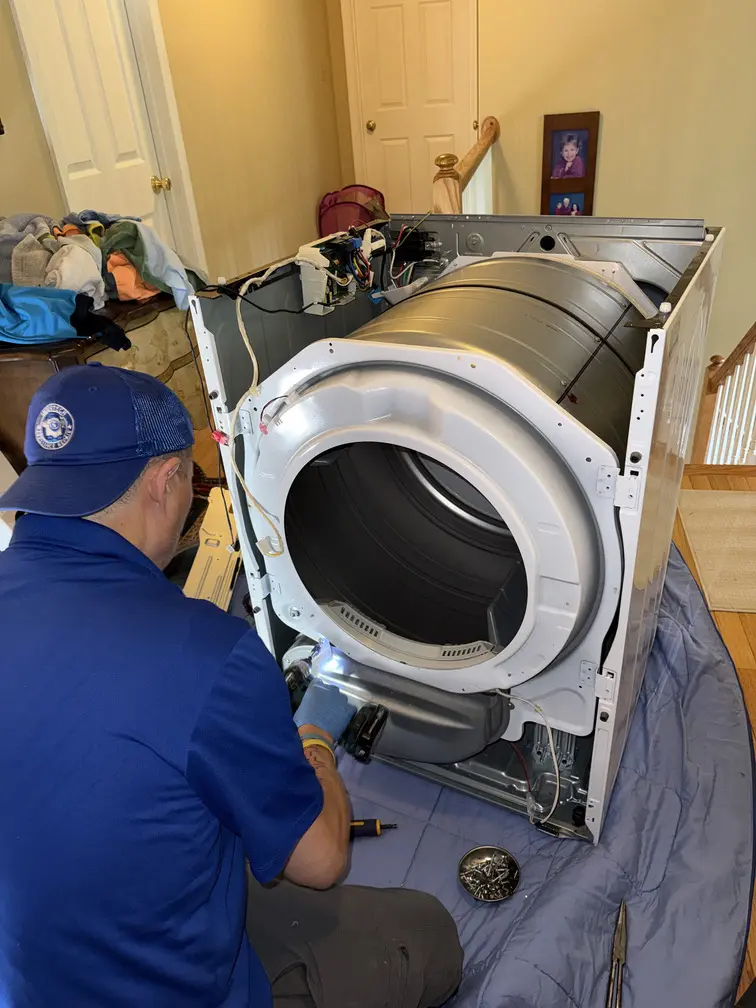
Modern dishwashers combine plumbing, electrical, mechanical, and electronic components. A failure in any of these systems can affect the appliance’s overall performance.
Below are some of the most common reasons Maryland homeowners request dishwasher repair.
Standing water at the bottom of the dishwasher is one of the most common service complaints. The problem may be caused by a clogged filter, blocked drain hose, obstructed garbage disposal connection, damaged drain pump, or malfunctioning check valve.
A small amount of clean water underneath the filter may be normal for some models. However, water covering the bottom of the tub, producing an odor, or remaining after the cycle has finished usually indicates a drainage problem.
Homeowners can begin by cleaning the removable filter and checking whether the kitchen sink and garbage disposal drain correctly. If water remains inside the appliance, the pump and internal drainage components may need professional inspection.
A leaking dishwasher should not be ignored. Even a small amount of water can damage flooring, cabinets, baseboards, and nearby electrical connections.
Dishwasher leaks may come from:
If water appears underneath the appliance, turn off the dishwasher and avoid running another cycle until the source has been identified. Locating an internal leak often requires removing the lower access panel or pulling the dishwasher out from beneath the countertop.
Poor cleaning performance does not always mean the dishwasher needs replacement. The cause may be a clogged spray arm, restricted filter, weak circulation pump, low water temperature, faulty inlet valve, or detergent dispenser problem.
Improper loading can also prevent water from reaching all surfaces. Large dishes, cutting boards, and cookware may block the spray arms or stop the detergent dispenser from opening fully.
If the dishwasher is loaded correctly and the filters and spray arms are clean, a technician may need to test water pressure, circulation, heating performance, and electronic controls.
Dishes that remain wet after the cycle may indicate a problem with the heating element, vent system, drying fan, rinse aid dispenser, temperature sensor, or control board.
Plastic containers naturally retain more moisture than glass or ceramic dishes. However, if every item remains cold and wet after the drying cycle, the dishwasher may not be heating properly.
A failed heating component can also affect cleaning performance because many dishwashers require hot water to dissolve detergent and remove grease effectively.
A dishwasher that does not start may have a simple power or door-latch issue, but it can also indicate a more complex electrical failure.
Possible causes include:
Check that the door closes securely and that power is available at the circuit breaker. If the control panel remains unresponsive or the dishwasher starts only intermittently, professional electrical testing is recommended.
Dishwashers normally produce sounds as water circulates, drains, and enters the appliance. Grinding, rattling, buzzing, squealing, or knocking sounds may indicate an obstruction or worn component.
Common sources of unusual dishwasher noises include:
Stop the dishwasher if the noise is loud, sudden, or accompanied by a burning smell. Continuing to operate the appliance may increase the extent of the damage.
A dishwasher that repeatedly stops before completing a cycle may have a door-latch problem, overheating motor, control board failure, water supply issue, or faulty sensor.
Intermittent failures can be difficult to diagnose because the appliance may work normally during one cycle and fail during the next. A technician can review stored error codes and test individual components under operating conditions.
Many modern dishwashers display error codes when the control system detects a problem. Depending on the manufacturer, a code may relate to drainage, heating, water filling, leakage, door locking, circulation, or communication between electronic components.
Write down the complete error code before turning off the appliance. The code provides useful diagnostic information, but it does not always identify the exact failed part. For example, a drainage code may be caused by a blocked hose rather than a defective pump.
Several basic checks can be performed safely before contacting a repair technician:
Disconnect power at the circuit breaker before removing filters, inspecting internal components, or reaching into the bottom of the dishwasher. Broken glass may be hidden inside the filter or pump area.
Some maintenance tasks are suitable for homeowners, but internal dishwasher repairs involve water lines, electrical connections, sharp components, and tightly installed parts.
Professional service is recommended for problems involving:
Replacing a component without first testing it can increase repair costs. Similar symptoms can be caused by several different parts, which is why accurate diagnostics are important.
A malfunctioning dishwasher does not necessarily need to be replaced. Many drainage, filling, heating, and control problems can be repaired by replacing one component or removing a blockage.
Repair may be the better option when:
Replacement may be more practical when the dishwasher has severe corrosion, a damaged tub, repeated major failures, unavailable parts, or several expensive components that need replacement.
A professional diagnosis gives homeowners the information needed to compare the repair estimate with the cost of purchasing and installing a new dishwasher.
Professional dishwasher service involves more than replacing the part that appears to be defective. A qualified technician evaluates the complete system to determine why the failure occurred.
During a service appointment, the technician may inspect:
Accurate diagnosis helps prevent unnecessary part replacement and reduces the likelihood of the same problem returning shortly after the repair.
InterTech Appliance Repair provides professional dishwasher diagnostics and repair for homeowners in Maryland. We service built-in dishwashers from major appliance manufacturers and repair common problems involving draining, washing, filling, drying, leaking, unusual noises, and electronic error codes.
Our service area includes Bethesda, Rockville, Potomac, Silver Spring, Clarksville, Fulton, Ellicott City, Columbia, and other nearby Maryland communities.
When you schedule a professional dishwasher repair service in Maryland, the goal is to identify the actual cause of the malfunction and recommend a practical repair based on the condition of the appliance.
Your dishwasher may need repair if it does not drain, leaks, leaves dishes dirty, fails to heat or dry, makes unusual noises, displays error codes, or stops before completing a cycle. If basic cleaning does not resolve the problem, professional diagnostics are recommended.
Yes. Dishwasher drainage problems are often caused by a clogged filter, blocked drain hose, garbage disposal connection, faulty drain pump, or damaged check valve. These problems can frequently be repaired without replacing the appliance.
A leaking dishwasher can damage flooring, cabinets, electrical connections, and nearby building materials. Stop using the appliance and arrange an inspection if water appears underneath or around it.
The dishwasher may have clogged spray arms, a restricted filter, weak circulation pump, water inlet problem, failed heating component, or detergent dispenser issue. Incorrect loading can also prevent water from reaching the dishes.
The required time depends on the problem, dishwasher design, accessibility, and whether a replacement part is needed. Many common problems can be diagnosed during the initial service visit.
InterTech Appliance Repair provides dishwasher diagnostics and repair in Bethesda, Rockville, Potomac, Silver Spring, Clarksville, Fulton, Ellicott City, Columbia, and nearby Maryland service areas.
Ignoring drainage problems, leaks, electrical faults, or unusual noises can lead to additional appliance damage and more expensive repairs. If your dishwasher is no longer operating correctly, professional diagnosis can help determine whether the problem can be repaired safely and cost-effectively.
Visit the InterTech Appliance Repair Dishwasher Repair Service page to learn more or request service in Maryland.