7 Common Washing Machine Problems and When You Should Call a Professional
A washing machine is one of the most important appliances in any home. It saves time, keeps laundry routines convenient, and helps families manage everyday chores with less effort. But when a washer starts leaking, making loud noises, failing to drain, or refusing to spin, the problem can quickly disrupt your entire day.
Some washer issues may seem minor at first, but they often become more expensive if ignored. Understanding the most common washing machine problems can help you know when it is time to stop using the appliance and schedule professional service.
If your appliance is no longer working properly, InterTech Appliance Repair provides professional Washer Repair services for homeowners throughout Maryland, Washington DC, and Northern Virginia.
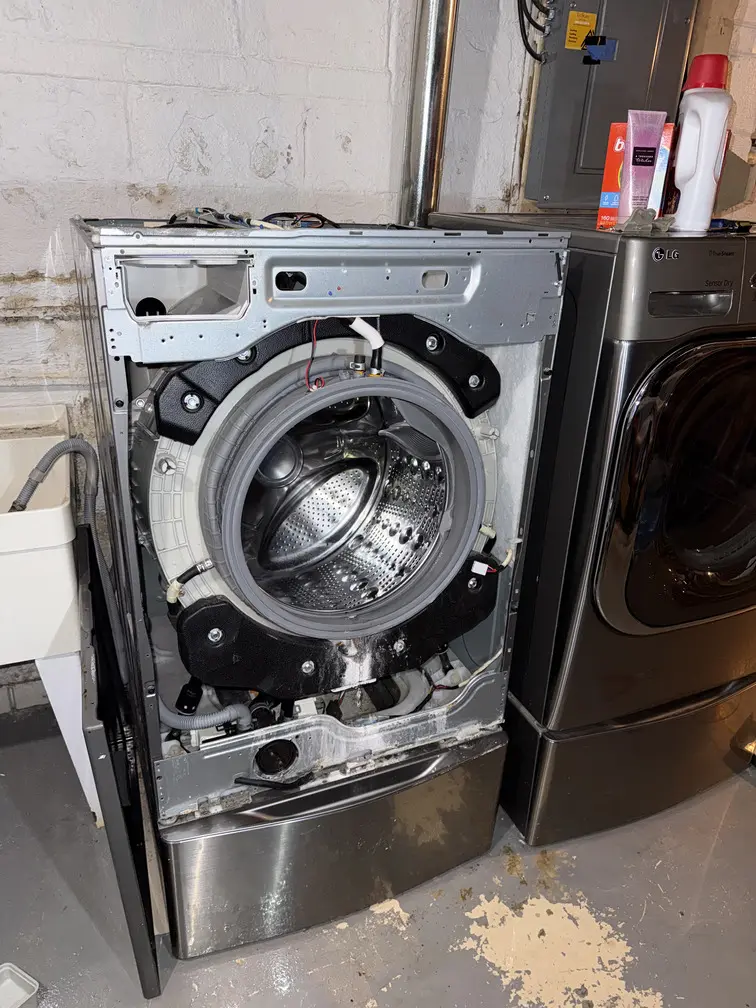
1. Washer Won’t Start
One of the most frustrating problems is a washer that will not start at all. Before assuming the appliance is broken, homeowners can check whether the washer is plugged in and whether the circuit breaker has tripped. However, if the power supply is not the issue, the problem may involve an internal electrical or mechanical component.
Common causes may include a faulty door latch, damaged lid switch, failed control board, broken start switch, or timer problem. Modern washing machines rely on multiple safety systems, so even one failed part can prevent the appliance from starting.
Because this type of problem may involve electrical diagnostics, it is best to have the washer inspected by a trained appliance technician.
2. Washing Machine Won’t Drain
If water remains inside the drum after the cycle ends, your washer may have a drainage problem. This issue is especially common when the drain pump filter becomes clogged with lint, coins, small clothing items, or debris.
Other possible causes include a blocked drain hose, damaged drain pump, faulty water level sensor, or control board issue. A washer that does not drain properly can also create unpleasant odors, mold growth, and poor washing results.
If the machine repeatedly leaves standing water in the drum, professional diagnosis is recommended before the problem causes additional damage.
3. Washer Is Leaking Water
Water leaks should never be ignored. Even a small leak can damage flooring, cabinets, walls, and nearby electrical components. A washer may leak from the front, back, bottom, or around the door depending on the source of the problem.
Common leak sources include worn door gaskets, loose hoses, damaged water inlet valves, cracked drain hoses, faulty pumps, or tub seal problems. Front-load washers may also leak if the rubber door boot becomes torn or covered with debris.
If your washer is leaking, stop using it until the source of the leak is identified and repaired.
4. Washer Makes Loud Noises
Washing machines naturally make some noise during operation, especially during the spin cycle. However, loud banging, grinding, squealing, knocking, or scraping sounds usually indicate a problem.
Excessive noise may be caused by worn drum bearings, damaged shock absorbers, broken suspension rods, loose motor components, a damaged drive belt, or foreign objects trapped inside the machine.
Continuing to use a noisy washer can make the repair more expensive. For example, worn bearings can eventually damage the drum and motor system.
5. Washer Doesn’t Spin Properly
If your clothes are still soaking wet at the end of the cycle, the washer may not be spinning correctly. This problem can happen with both top-load and front-load washing machines.
Possible causes include an unbalanced load, broken drive belt, faulty lid switch, motor problem, worn clutch, damaged suspension system, or control board failure.
If the issue continues after reducing the load size and redistributing laundry, it may be time to schedule professional washing machine repair.
6. Washer Displays Error Codes
Many modern washers display error codes when something is not working correctly. These codes may relate to water supply, drainage, door lock problems, motor performance, temperature sensors, or electronic control issues.
While resetting the washer may temporarily clear the code, recurring error codes usually mean the underlying problem has not been solved. A technician can use diagnostic tools and manufacturer-specific knowledge to identify the exact cause.
7. Washer Has Bad Odors
Bad smells are common in washing machines, especially front-load models. Mold, mildew, detergent residue, and trapped moisture can collect inside the drum, gasket, dispenser, and drain system.
In many cases, regular cleaning can help. However, persistent odors may indicate drainage issues, a clogged filter, or hidden buildup inside the appliance.
Leaving the washer door open after each cycle, using the correct detergent, and cleaning the gasket regularly can help prevent odors from returning.
When Should You Call a Professional Washer Repair Technician?
You should schedule service if your washing machine leaks, refuses to start, does not drain, fails to spin, makes loud noises, smells like burning, or displays repeated error codes. These symptoms often point to mechanical, electrical, or drainage problems that should be inspected professionally.
Professional washer repair can help extend the life of your appliance and prevent unnecessary replacement costs. A trained technician can identify the problem, explain the repair options, and replace faulty parts when needed.
Washer Repair Service Areas
InterTech Appliance Repair proudly serves homeowners across Maryland, Washington DC, and Northern Virginia. Our service areas include Bethesda, Rockville, Potomac, Silver Spring, Washington DC, Clarksville, Fulton, Ellicott City, Columbia, Arlington, Gaithersburg, Germantown, North Bethesda, Kensington, Chevy Chase, Derwood, Alexandria, McLean, Tysons, Falls Church, Reston, and nearby communities.
If your washer is no longer working as it should, schedule reliable washer repair services with InterTech Appliance Repair.